
A slick online store can be reassuring at first. Clean photos, polished product copy, countdown banners, glowing reviews, and a smooth checkout all make the page feel professional. The problem is that scam shopping websites have learned the same tricks.
They no longer always look messy or obviously fake. Sometimes the danger is not a broken page, but a page that feels strangely perfect.
The goal is not to become paranoid. It is to slow down, look past the shine, and check whether the store behaves like a real business.
The Content Test
Before you worry about checkout security, read the page like a normal person. Does it actually answer your buying questions, or does it just sound confident?
Over-polished copy often uses big promises without useful detail. You might see phrases like “premium quality,” “customer favorite,” “limited offer,” and “trusted worldwide,” but no clear material specs, sizing notes, warranty terms, stock information, or realistic delivery window. That is where the page starts to feel hollow.
This is also where AI-written storefront copy can become tricky. A tool like an AI content detector may help you review suspiciously generic product text, but it should not be your only check.
Some legitimate brands use AI assistance, and some scam pages are edited by humans. The stronger signal is whether the content gives you practical details that reduce risk before you buy.
Product Pages Should Make Buying Easier
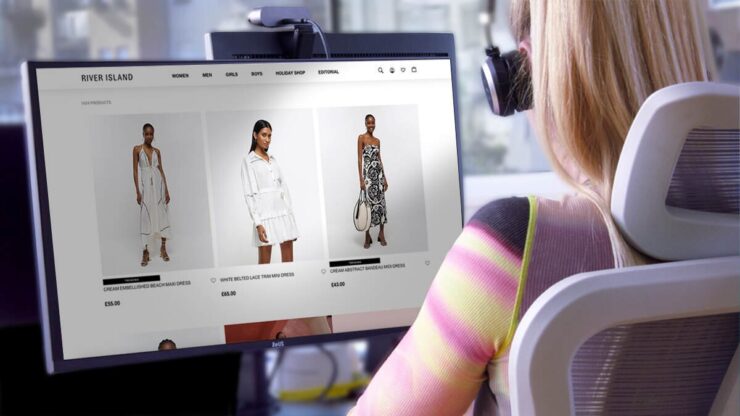
A real product page usually helps you make a decision, even if you do not buy. It explains what the item is, who it is for, what is included, and what happens if it does not fit your needs.
A suspiciously polished page often skips that boring but important layer because its real job is to move you toward payment.
Check whether the page gives you buyer-level information, not just sales language:
- exact dimensions, materials, compatibility, or model numbers
- realistic delivery dates and shipping costs before payment
- return conditions written in plain language
- visible customer support details beyond a contact form
If the product page looks expensive but answers almost nothing, pause. Good ecommerce content should feel helpful, not slippery.
Trust Signals Need To Be Clickable And Verifiable

Fake online stores love trust badges, review stars, payment icons, award logos, and “secure checkout” graphics because they are easy to copy. A badge is not proof unless it connects to something real. The same goes for social media icons, accreditation marks, and customer service claims.
|
Polished signal |
What to check before trusting it |
|
Trust badge |
Click it and see if it verifies the same store |
|
Five-star reviews |
Look for dates, detail, and mixed feedback |
|
Social icons |
Check whether profiles are active and consistent |
|
Contact page |
Verify email, address, phone, and response quality |
The important thing is not whether the site has trust signals. It is whether those signals survive a quick click. If nothing opens, everything redirects to the homepage, or the details do not match, the polish is probably decorative.
Urgency Can Make A Page Feel More Convincing
Countdown timers, “only 3 left” labels, spinning discount wheels, and pop-ups showing recent purchases are designed to stop you from thinking too long.
Some real stores use urgency too, so urgency alone does not prove a scam. The issue is when every part of the page pushes speed while hiding substance.
A useful rule: the more a store rushes you, the more time you should take before paying.
Step away from the page for a minute. Search the store name with words like “review,” “complaint,” or “scam.” Compare the price with at least two known retailers.
Type the brand’s official website into your browser instead of clicking through an ad. A polished page wants momentum. A careful shopper breaks that momentum.
Reviews That Look Too Clean Deserve A Second Look
Reviews are supposed to create confidence, but fake or filtered reviews can make a page feel suspiciously perfect.
Be careful with stores where every review sounds the same, every customer gives five stars, and every comment repeats the product name in an unnatural way. Real buyers usually mention small details, delays, fit issues, packaging, customer service, or comparisons with other products.
Watch for patterns that feel manufactured:
- many reviews posted on the same day or within a short window
- generic praise with no product-specific detail
- review photos that look like stock images or reused catalog shots
The best move is to leave the store and search for independent feedback. A store’s own review section is useful, but it should not be the only evidence.
The Final Pre-Purchase Check
Before you buy from an unfamiliar online store, do one last reality check. Look at the domain carefully, especially if you arrived from a social ad, influencer post, email, or text message.
Misspellings, extra words, odd endings, and brand names mixed with discount terms can all be warning signs. Also check whether the store asks for more personal information than it needs.
Payment matters too. Credit cards and established payment platforms usually give you more options if something goes wrong.
Be more cautious if the seller pushes bank transfer, gift cards, cryptocurrency, or payment apps with little buyer protection. A real store should make you feel informed before checkout. A risky one usually makes you feel hurried, impressed, and slightly unsure.
FAQs
1. Can a legitimate new online store still look suspicious?
Yes. A new store may have few reviews or limited social proof. The difference is whether it responds clearly, explains policies, uses consistent branding, and gives enough information for a fair decision.
2. Should I avoid every store with perfect reviews?
No. Some stores genuinely earn strong reviews. What matters is the pattern. Dates, varied wording, product detail, and a few balanced comments feel more believable than identical praise.
3. Is a secure checkout icon enough to trust a store?
No. A secure connection protects data in transit, but it does not prove the seller is honest. Still check the domain, contact details, policies, reviews, and payment options.
4. What should I do if I already ordered from a suspicious store?
Save confirmations, screenshots, receipts, and messages. Contact the seller first, but do not wait too long if there is no response. Then contact your payment provider.
Slow Down When A Store Looks Too Perfect
The safest shoppers are not the ones who never click a new store. They are the ones who know how to look past the shine. A polished page can belong to a serious brand, but it can also be a carefully built trap.
Also read: How to Save Money on Online Shopping?
Check the URL, read the details, test the trust signals, compare prices, and pay in a way that protects you. If the page looks flawless but leaves basic questions unanswered, trust that uncomfortable feeling.
Online stores should earn confidence, not just design it.